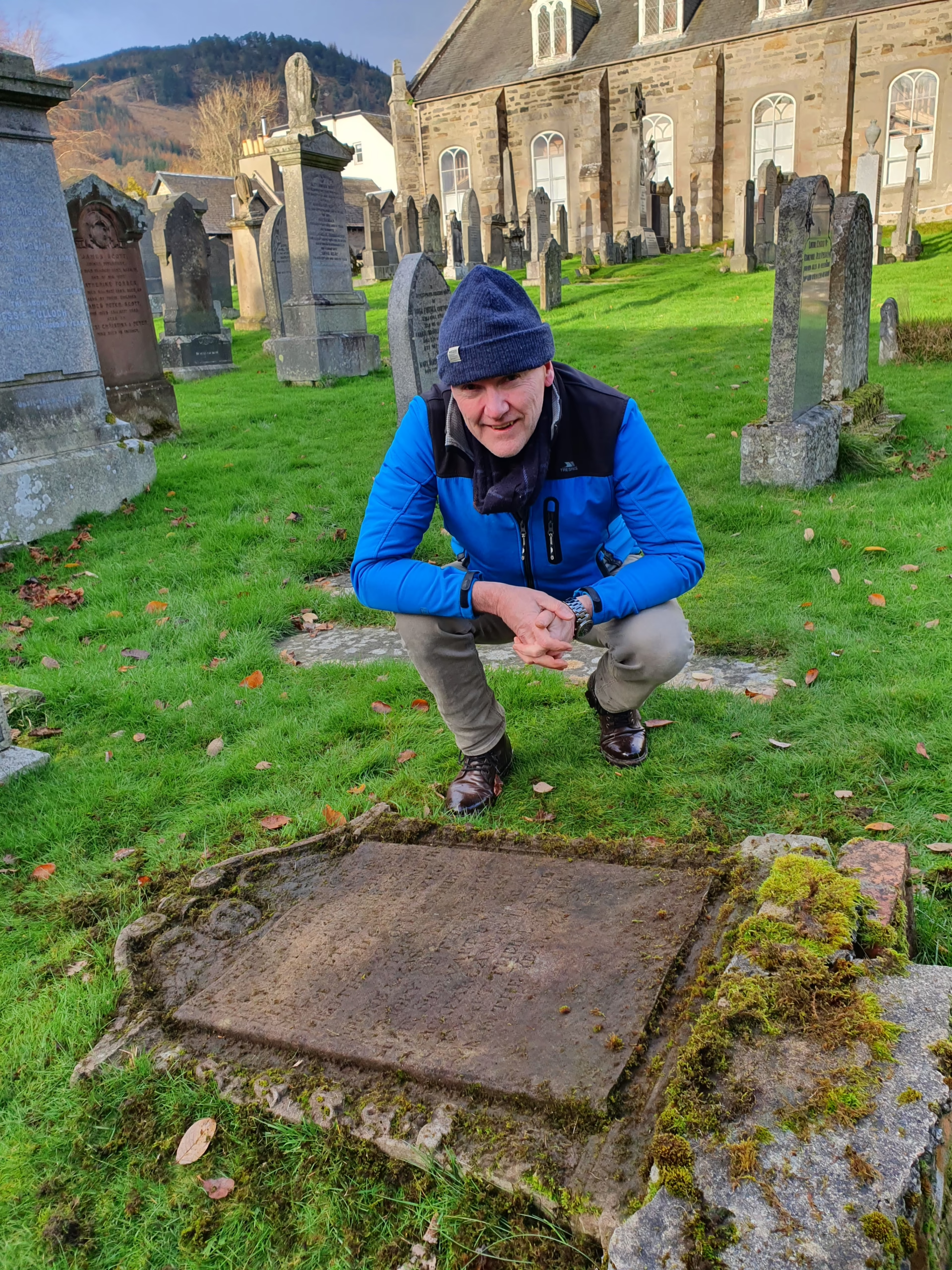
The inscription revealed that Daniel regarded his parents as tenants rather than crofters, a subtle but important distinction in how rents and taxes were paid. John Stewart died in 1741, the very year Daniel was born, leaving Margaret to raise her children alone. She never remarried, and Daniel grew up in what was effectively a depleted household, shaped by the absence of a father figure. This might help explain Daniel’s motivation in later life to establish schools for the destitute boys of Edinburgh and Logierait.
Margaret herself came from the Macfarlane and Stewart families rooted in Moulin, which explains the burial site. Her resilience was tested further when Daniel was just four years old. In 1745, the Atholl estates were ravaged during the Jacobite uprising, with both sides sweeping through the region. Margaret, supported only by in-laws who may have gone to war or fled the fighting, was left to fend for herself and her two young children in a time of turmoil.
The gravestone also tells us something about Daniel’s later life. In 1768, he arranged for the stone to be raised, commissioning its fine carving. This act not only demonstrated his enduring respect for his parents but also hinted at his financial stability by that time, he had the means to afford such craftsmanship.
What began as a cold and moss-covered search in a Highland churchyard has provided a vivid glimpse into the formative years of Daniel Stewart. His parents’ struggles, the upheaval of the ’45, and his later gesture of remembrance all enrich our understanding of the man who founded our school.