Thinking back to your time at Mary Erskine, what subjects or experiences had the biggest impact on you, and why?
At school, it was the mix of subjects that I loved. I enjoyed the sciences like Physics (Mr Herbison made it fun and understandable) and Maths, where I liked the precision of the answers – coming out of an exam and knowing how well (or not!) you had done. I also loved the creative subjects including Art with Mrs Pettigrew, whose passion for the subject was infectious. I also did a Higher Craft and Design with Mr Brown who still teaches at school today. At one point I was pretty sure I wanted to be an Architect which required both scientific and artistic ability – the careers software system spat that out (!) . . . and so I chose subjects with that in mind.
Sport, especially hockey, was a huge part of my extracurricular school career. I played in the 1st XI and went on a fantastic hockey tour to Holland. I also played and enjoyed golf at school, although the opportunities for golf were more limited with the school at that point, with most of my golf played outside of school.
After leaving MES, you chose to attend the University of St Andrews. What attracted you to St Andrews, and what did you decide to study there?
I always had a love of St Andrews as I spent family holidays there every summer. My memories were of sunshine, barbecues on the beach, a lot of golf and fun putting competitions on ‘The Himalayas’ (the famous 18 hole putting course). At University, I quickly discovered how different it was to be there between October and May – I spent a lot of time being very cold! Both of my elder sisters, Claire Kirkwood (now McDowell) and Carrie Kirkwood (now Armstrong) who were also at MES and left in 1991 and 1992 respectively, also went to St Andrews University. I had been to visit them a few times and got to experience a touch of student life with them, enjoyed it and realised that St Andrews was for me!
St Andrews is a fantastic University as it is a small town and so you feel like the whole place is yours as a student (although I am not sure the locals feel the same!). It really has the feel of a Scottish version of Oxbridge / Durham. I applied to study Geography but also did Psychology and Management in my first year and eventually ended up doing an Honours Degree in Psychology (the perfect blend of arts and science which I had enjoyed at school).
You graduated with an MA in Psychology. What inspired you to pursue this subject, and what aspects of the degree did you enjoy most?
I enjoyed the fantastic mix of both science and the arts. There was a lot of statistical analysis in the coursework side; I also loved the other aspects of the subject like social and developmental psychology. For my dissertation, I went to children’s nurseries to study babies and toddlers and the idea of ‘theory of mind’ – what sets us apart from other species – that ability to understand that other people have beliefs, desires, intentions and perspectives that are different from one’s own. I took psychology as a first-year subject and realised it was a much better fit for me over geography and management, my other first year subjects.
After graduation you moved to London and, after an internship at L’Oreal, were then selected for their graduate scheme. What was that experience like, and what did you learn from the process?
I moved to London after graduating because there seemed to be broader and more diverse career opportunities available. Although it felt like a risk at the time, I was confident something would come along – even though I hadn’t yet landed on a clear career path and was exploring options across accountancy and management consultancy.
That changed when I secured an internship at L’Oréal. I immediately loved the pace, the opportunity to work on globally recognised brands, and the level of challenge. Brand management felt like the perfect blend of creativity and analytical thinking, which really suited my skillset. Even as an intern, I was given meaningful responsibility from day one – working on the launch of L’Oréal Solar Expertise and ultimately presenting the strategy to the L’Oréal Paris division in the South of France.
Following the internship, I was selected for L’Oréal’s graduate scheme, which provided a strong foundation across core areas of the business through rotations in sales, marketing, logistics, and category management. What stood out most was how it encouraged a holistic understanding of how a business operates, highlighting the importance of cross-functional collaboration and the need to think beyond your own role to drive shared success.
L’Oréal is known for its strong French corporate culture. Did you notice cultural differences in the workplace, and how did you adapt to them?
There’s no doubt that L’Oreal is an intense, high pressure and demanding work environment. It certainly wasn’t a typical nine to five, with most evenings spent in the office. As one of the world’s largest and most successful health and beauty organisations with an array of leading global brands, it expects commitment, high standards and strong productivity.
The French business culture can be different to British culture. Feedback can be very direct, rather than being couched in niceties. There is no need to read between the lines at L’Oréal! Mistakes don’t go unnoticed and need to be rectified swiftly. Management expect you to be on top of your brand numbers – volume and value sales, market share, share of voice, profit contribution, and so on.
What you have to quickly learn is that any challenge, any criticism isn’t personal, it’s simply business. For me, this was my first corporate role and so I adapted quickly to this style of management and culture, partly as I had to – it was effectively all I knew. It was only on leaving L’Oréal that I perhaps discovered that not all organisations work in quite the same style!
Over your ten years at L’Oréal, how did your career progress, and what roles or achievements stand out to you from that time?
I progressed through the ranks at L’Oréal, first going ‘operational’ at the end of the graduate management trainee scheme as the Brand Manager on the famous L’Oréal Paris Studio Line styling brand and eventually ending my time there as a Group Brand Manager, responsible for the leadership of a portfolio of brands which contributed over 45% of the L’Oréal Paris division’s UK turnover.
A particular highlight was working with Cheryl Cole as a new ambassador for Elnett, developing a bespoke UK media campaign with her, which ultimately drove Elnett to a record market share, and critically, brought in a younger cohort of consumers to the brand.
What ultimately led you to move on after a decade with the company?
I met my husband at L’Oréal, who happened to also be a Scot. When it came to discussing having children, we made a decision that we wanted to raise any we may have in Scotland, as we had no particular strong affinity to London, other than it had been a fantastic city in which to commence our careers and to live with friends in our 20s. We had family up in Scotland on both sides and it appealed to bring up our children close to them.
If there had been a L’Oréal office in Scotland, I would have stayed with the company, but sadly it meant making the decision to leave. I left with many great experiences and many great friendships, which continue to this day.
When you returned to Edinburgh, you joined Genius Foods. What appealed to you about the company and its mission?
Genius Foods was operating in a dynamic and growing consumer category. The opportunity and the challenge to set a clear strategy to build and develop the brand over the next five years was an appealing one.
You later moved into your family’s business, Alexander Kirkwood & Son, a company that just celebrated 200 years. For those who may not know, can you describe what Kirkwood & Son specializes in?
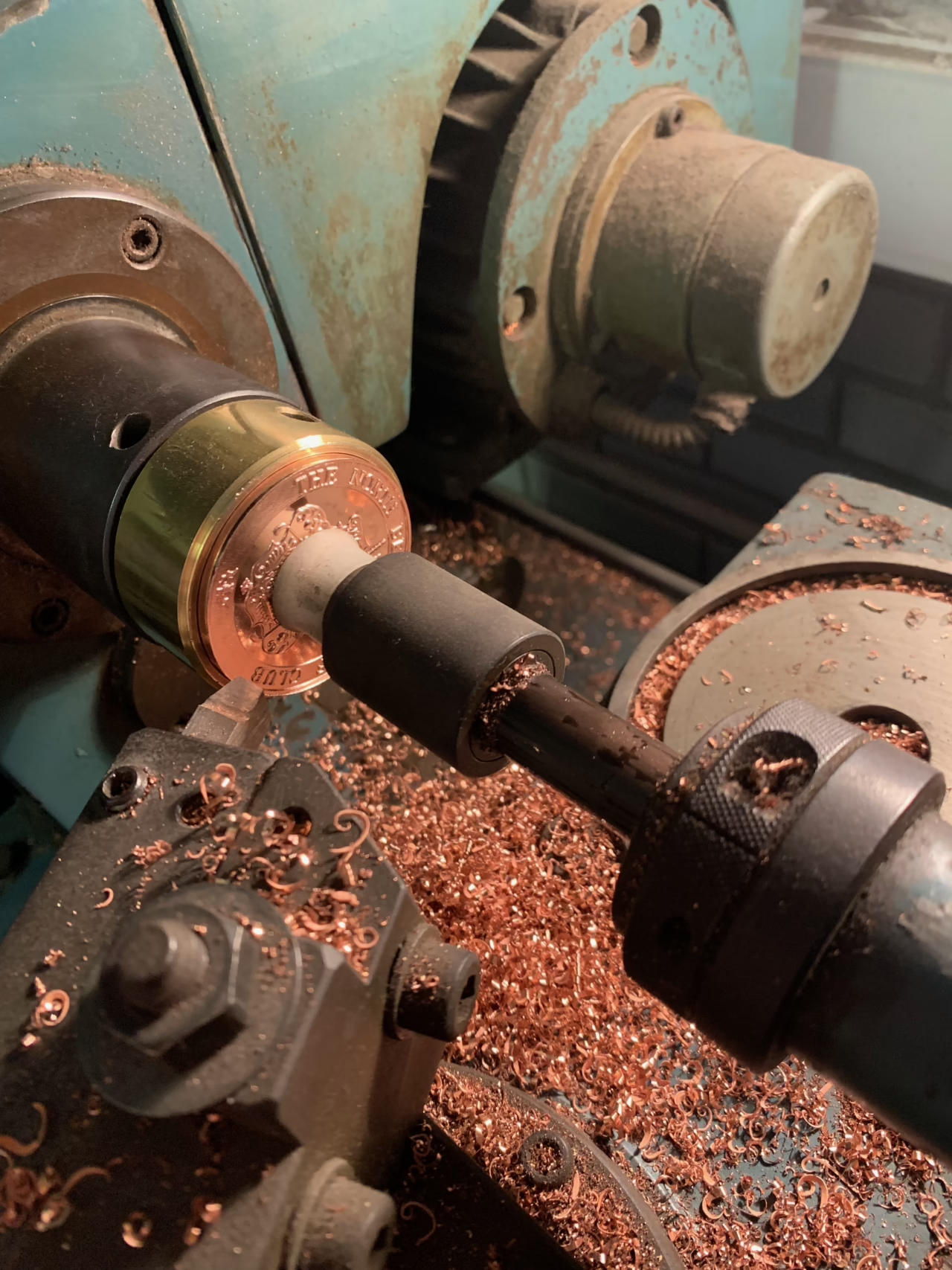
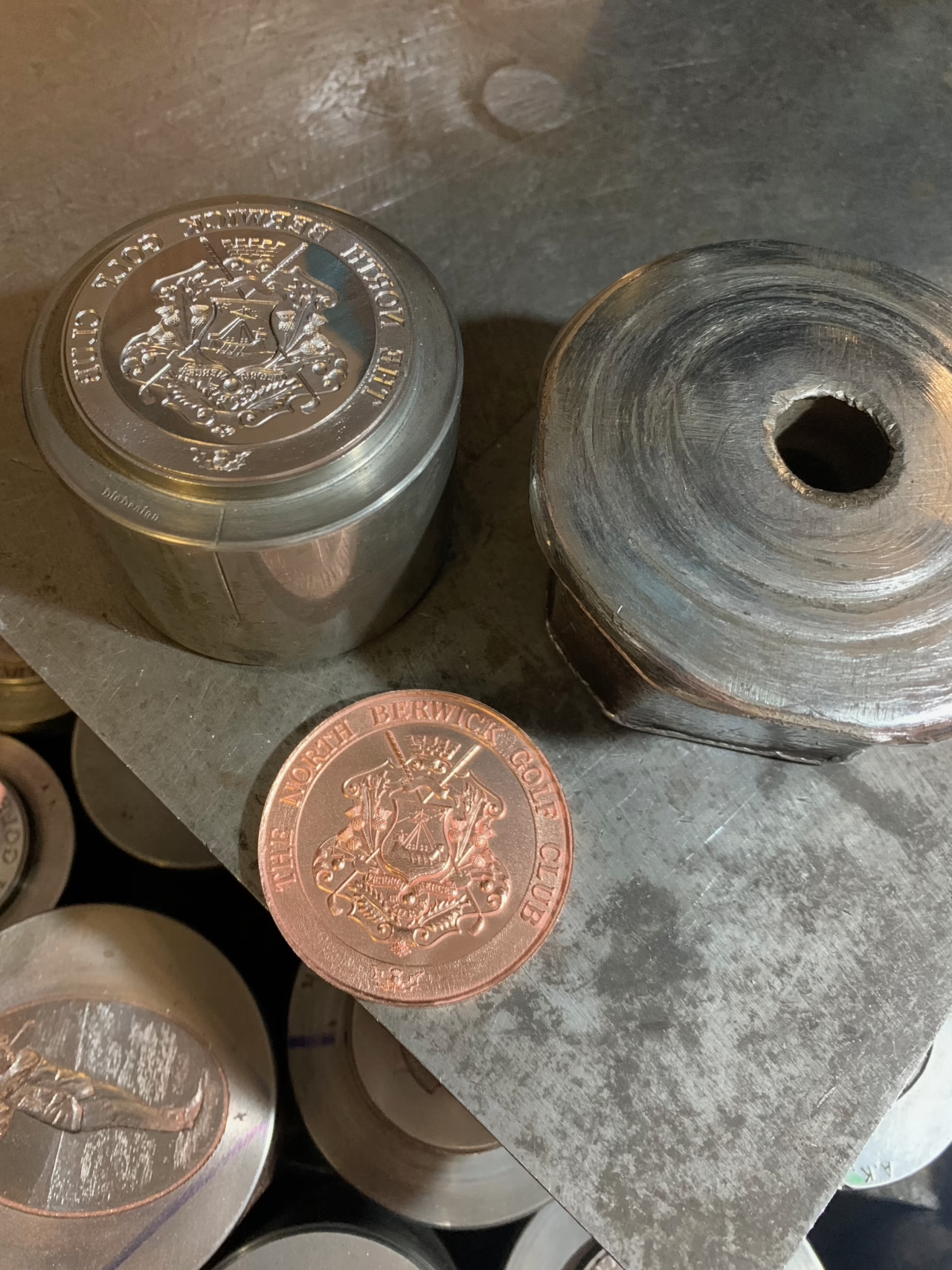
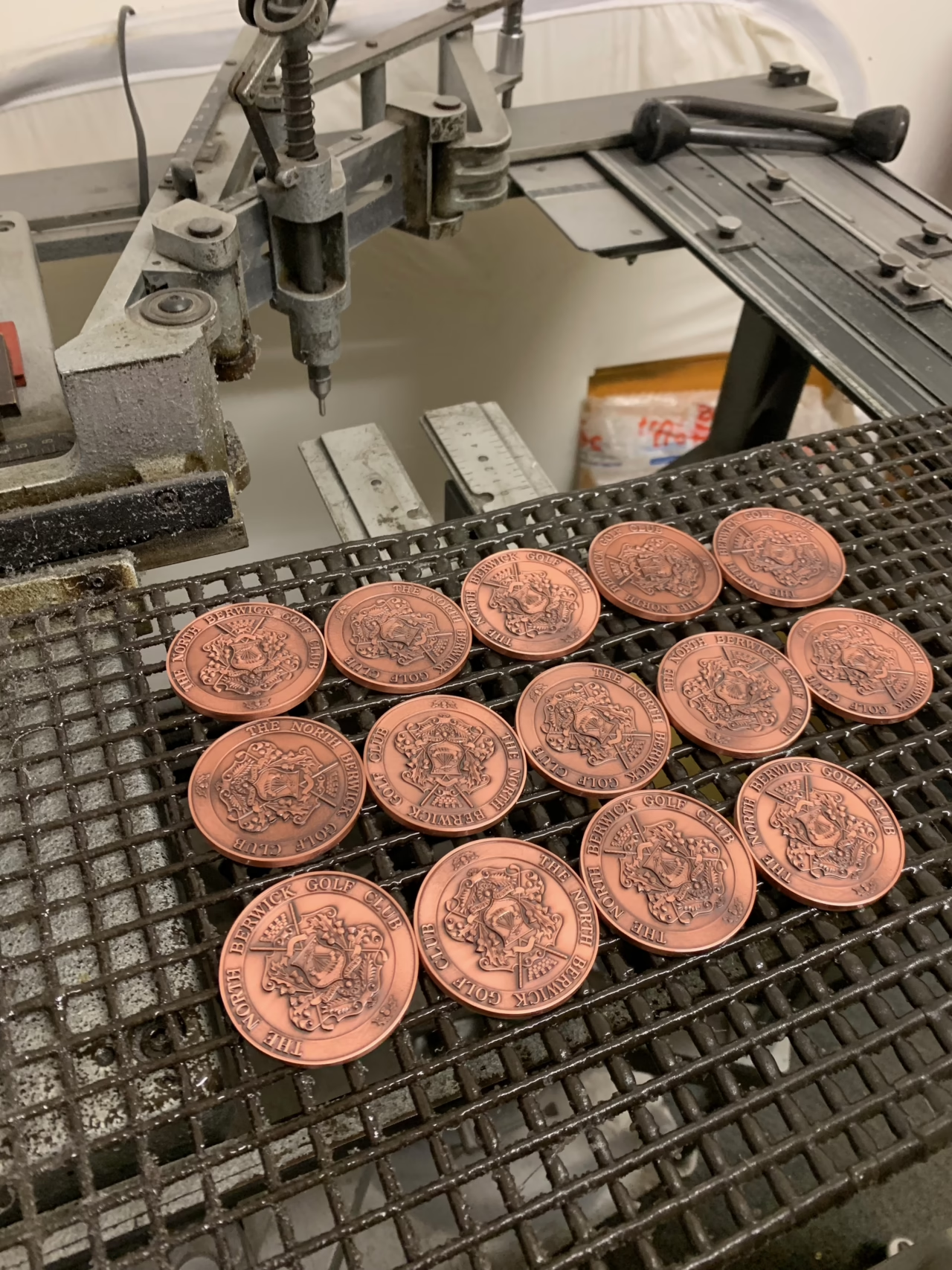
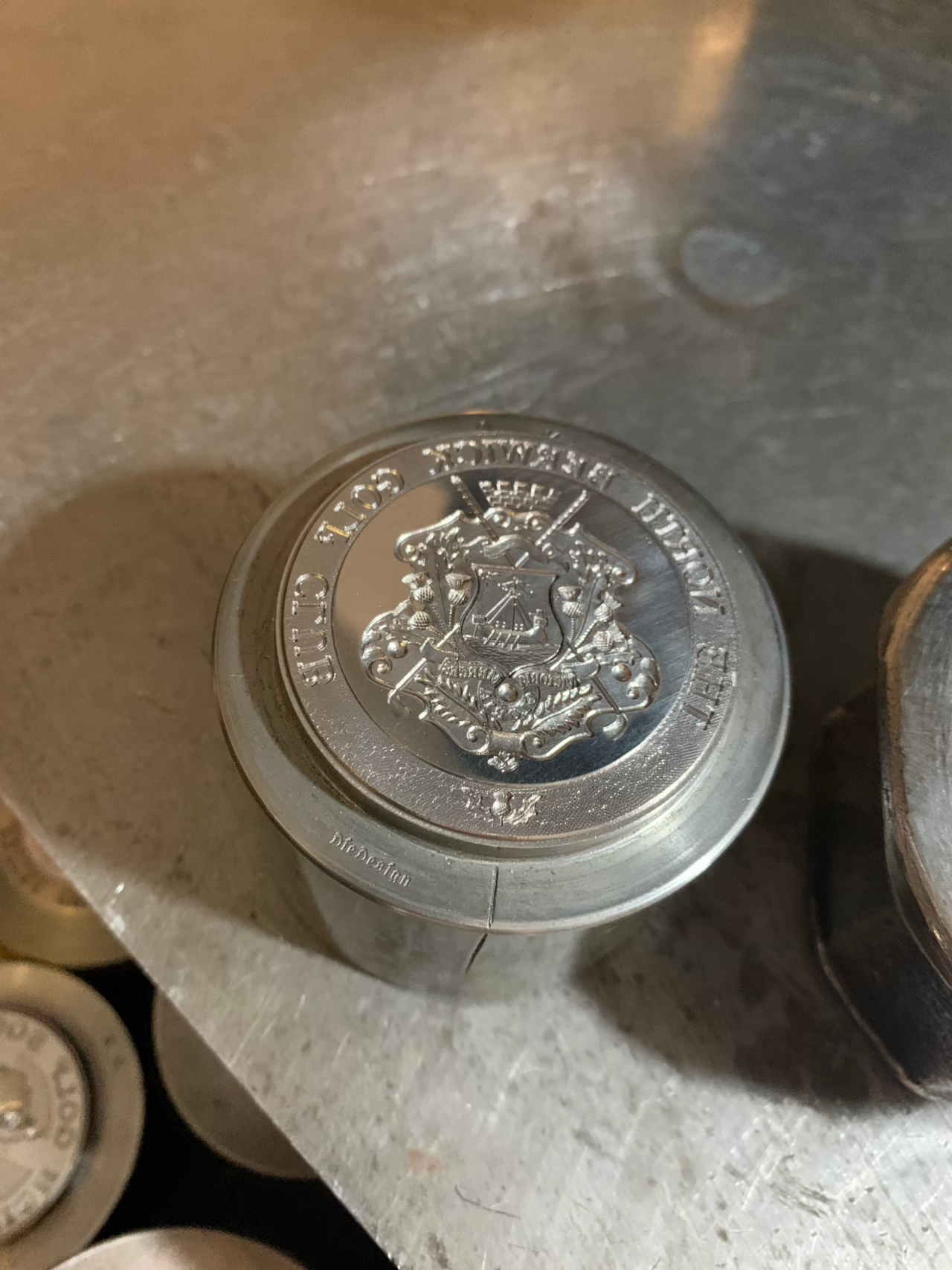
Alexander Kirkwood & Son is a historic medallist, silversmith and trophy making business, celebrating 200 years in 2026. We are one of the UK’s oldest independent family run companies. Our clients include universities, societies, sports clubs and organisations around the world. Examples include the Royal and Ancient Golf Club of St Andrews, the University of Edinburgh, the Royal Scottish Academy, the Royal Scottish Geographical Society, Royal Portrush and Atlanta Athletic Club, to name just a few.
Whilst established in 1826, our history actually dates back further to 1774 and to James Kirkwood of Perth in Scotland. He was persuaded by Sir William Forbes to move to Edinburgh to produce the hand engraved metal plates for the production of the first banknotes for the bank of Forbes, Hunter & Co. James Kirkwood’s son Robert would become a renowned engraver of the plates used for the production of banknotes, maps and geographical globes. Robert’s son Alexander Kirkwood would become one of the most renowned and finest die cutters of the era and from 1826, the company would become primarily known for the production of high-quality medals.
Over the last 200 years, we have been the manufacturer of many famous medals, trophies and bespoke silverware items, including as an example, solid silver replica long nosed drivers for Atlanta Athletic Club (former host of the US Open, US Women’s Open, the Ryder Cup and PGA Championship), from which silver golf balls are hung to represent the presidents of the club.
Whilst it is not our main business, we have been called in the past to manage some delicate repairs, including for the likes of the famous Calcutta Cup, as well as The Open’s iconic Claret Jug!
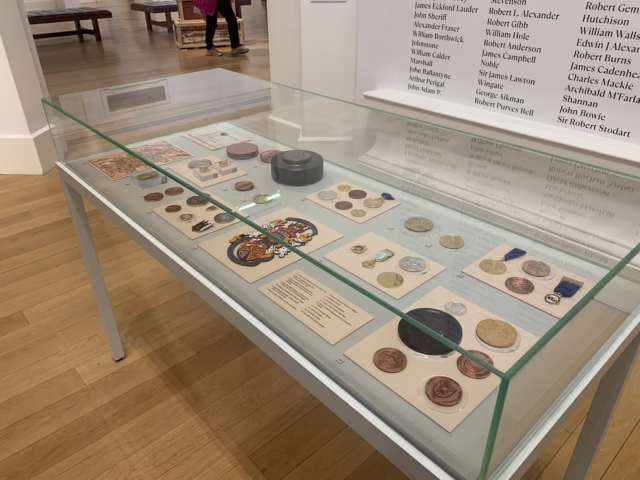
Kirkwood & Sons display cabinet at RSA 200 year celebration
Initially, you joined Alexander Kirkwood & Son just to help part‑time. What motivated you to step in at that moment? What shifted your perspective from ‘helping out’ to ultimately taking on the leadership of the company?
I initially stepped into the business on a very short-term basis to help my father (the fifth generation to run the business) during a period when he was under-resourced. I was in discussions on a number of other career opportunities, having left Genius Foods, but had a few weeks to decide on my next steps and so happily agreed to fill some of the gap at Alexander Kirkwood & Son. I did so with no intention of it being anything other than a helping hand for about a fortnight!
Whilst Alexander Kirkwood & Son had always been prominent in the family background, it was only when I stepped into the business to help out that I fully absorbed the extraordinary history and heritage of the business. In just a few short weeks, I came away with a renewed pride in my family business, discovering the amazing array of clients around the world and learning some of the great stories of its work.
At that time, my father, already in his late 70s, yet still working, had begun to start thinking about how he could move into (a well-deserved) retirement. With limited pro-active marketing of the business, I was immediately struck by the awareness of the business and company brand within medal and trophy making, the strength of its reputation, and the number of approaches that it received for new commissions, despite not actively seeking them out. I suddenly felt that it had a lot of opportunities to expand upon and its story had so much more to come.
You recently completed an online MiniMBA programme. Why is it important to you to continue developing your skills, especially in the fast‑evolving world of marketing and business?
It’s important to continue developing your skills for exactly that reason highlighted – we operate in a fast-evolving world of business. Therefore, there is always more to learn, more to understand, new technologies to discover, new channels to reach your clients. You never know all the answers, you are never the ‘complete’ business manager, and focusing on always trying to continue to develop your skillset leads you to constantly think about your business, its direction, what it needs to do in the future.
Alexander Kirkwood & Son has an extraordinary legacy. How do you balance honouring that heritage while ensuring the business remains relevant and future‑focussed?
I think that balance isn’t as difficult as some may assume, mainly as I don’t believe that heritage is at odds with being relevant and future focused. I think the heritage of the business is honoured by retaining a focus on our craftsmanship, expertise and quality. That is valued by our clients as much today as it was 200 years ago. We remain relevant by ensuring that we continue to listen and understand the requirements of our clients, and future-focused by being aware of the changes in our industry. For instance, the new technologies available to make and develop medals and trophies, using them as appropriate to maintain our competitiveness, without losing our quality.
Medals, trophies and silverware can be surprisingly emotional items. There is often a deep emotional connection to the creation of a medal as an example – capturing a significant moment in time or honouring an individual for their work or service. The significance of medals and the strength of their meaning can be seen in the way that they can often be passed down from generation to generation, maintained within a family long after the original recipient has gone.
Looking ahead, what do you see as the next exciting development or priorities for Alexander Kirkwood & Son?
Probably the most exciting development for Alexander Kirkwood & Son is its continued expansion of our international client base, which is a priority focus for us. Whilst we have always worked with clients in the likes of the US, this is an area that we are increasingly looking to further enhance. I visited Boston late last year on a trade mission with the Edinburgh Chamber of Commerce to meet with the likes of Harvard University and some private country clubs and the intention is for us to undertake more trade missions to drive awareness of the business in international markets.
You’ve moved across industries and invested in ongoing learning; what skills do you think young alumni should focus on building today to stay adaptable?
I think it’s so important to maintain an adaptable mentality. This comes from being open minded, being inquisitive. It comes from not only accepting change, but more importantly, embracing change. Seek constructive challenge in your work, take positive action from this feedback, and always strive to improve.
I would also encourage individuals to step back from the detail of the day to day to observe the wider perspective – this is easier said than done – those that do it well become great leaders.