Can you tell us about some of the highlights from your time at The Mary Erskine School?
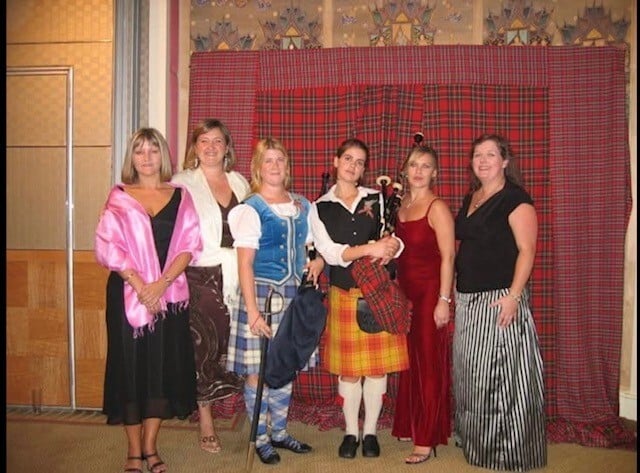
I loved my time at MES. I joined the school in January 1985, in Primary 5, at the Daniel Stewart’s campus. In Primary 6 us girls headed along the road to the MES campus. I spent most of my later Senior School years in the art department or library. I can still smell the art department! The other highlights were Friday afternoons after school where I joined the Highland Dancing classes and eventually became joint Head Dancer alongside Nikki Butt (now Cutler). There were four girls in my year who lasted the pace at MES as Highland Dancers and were a formidable team. We spent summer terms practicing and competing against other schools and on Pipe Band and Dancers’ tours in Europe. I took up the bagpipes in the end too! CCF on a Monday and the army camps were also a highlight.
Were there any teachers or experiences that inspired you to become a teacher yourself?
Becoming a teacher was not part of my plan initially, but while I was at school I enjoyed Mrs Pettigrew’s art classes. I went on to study History of Art at The University of St Andrews.
What attracted you to international education?
Having started my life as an ‘army child,’ I had lived in several countries by the time I joined MES. I knew that one day I wanted to continue my travelling journey and found a way to do it. Having travelled around the world for a year by myself after being at The University of St Andrews, I came back and started the process to join the British Army. When this fell through, I decided to try a different route and went to Barcelona and completed my CELTA (Certificate of English Language Teaching for Adults). I then worked there at International House (IH) in Mataro. I transferred to IH in Bangkok a year later.
Did you experience any culture shock when you first arrived in Bangkok and, if so, how did you overcome it?
I had visited Bangkok before as my uncle lives there, and at the time had thought what a strange and hard place to live, but fabulous to visit. However, as soon as I got there in 2004, I got stuck into my job and immediately found the Bangkok St Andrew’s Society and the Bangkok Thistle Pipe Band (now known as The British Club Pipe Band). I was surrounded with expat life and threw myself into becoming an integral part of it. Since I had visited firstly in 1997 and then in 2001, the city had a much better transport system with a sky train and underground, so it was much easier to navigate. Bangkok had developed a lot and there were more shops selling familiar products. Every sense was challenged every day with the colourful sights, smells of cooking and incense, Thai language spoken all around me and delicious food. One year turned very easily and quickly into 22 years.
Tell us a bit about your life in Thailand, and what kept you there for 22 years?
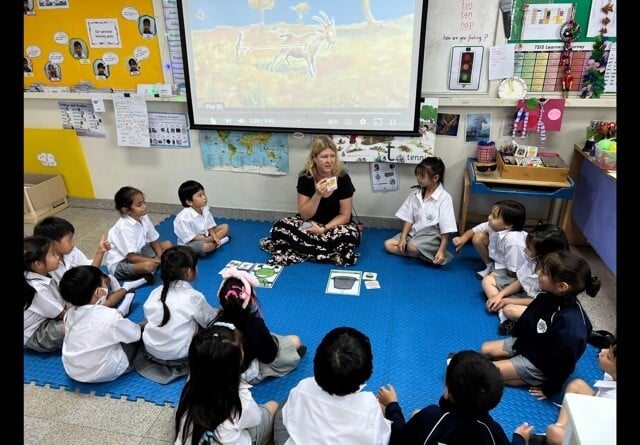
I started in a language school teaching adults which meant the hours were evenings and weekends mainly. I enjoyed this but soon realised that I really wanted a job with more regular hours. I got a job at an international kindergarten which gave me more experience teaching children. One day I met an ex British Army officer who was now a Principal of a bigger International School. He invited me along for a meeting and offered me a job as a Reception teacher. Eventually I was encouraged to do my PGCE which I did in Bangkok through The University of Sunderland. This was a key point in my life as it gave me options of a better salary, personal development and stability in Thailand. This was alongside the amazing friends I had met through expat avenues and my wonderful Thai friends. Suddenly Thailand was really my home.
While living in Thailand, you were part of the Bangkok St Andrews Society. Why was it important for you to stay connected to your Scottish roots while living abroad?
Initially I reached out to the Scots in Thailand as a way to make connections and to continue my piping and Highland Dancing. Within my first year I had joined the Committee of the Bangkok St Andrew’s Society and spent 19 years on that committee. I had the honour of becoming the fourth female Chieftain in 2010 of the second oldest St Andrew’s Society in the world. I enjoyed being part of a team who brought Scottish culture to Thailand, helping others to make connections and I loved being an ambassador for my country. We laid on an annual ball around St Andrew’s Day, a Burns Supper, golf matches including the Haggis Bash and the Celtic Cup, amongst many other events.
What aspects of Thai culture do you admire most?
Despite the language barrier, Thai people are so friendly and hospitable. I managed to master enough Thai to communicate with taxi drivers and stall sellers in their own language which they loved. Thai people are playful and have a great sense of humour. Many people will know that when bargaining for goods at a stall, if you play the game with the vendor and don’t get angry or aggressive, you will do a lot better and have laugh while doing it.
What skills do you think are most important for adapting to a new culture?
Having an open mind, a willingness to learn, and being patient are very important. It will take time to adapt to everything. Meeting locals and trying to understand their ways is imperative to understanding how different cultures work. In Thailand, for example, when someone laughs at you it is often because they are nervous or have made a mistake themselves. It took me a while to understand this and not to take it personally or get frustrated with them.
What has changed in education since you’ve been teaching, and what things have stayed the same?
I worked mainly within the English curriculum teaching Reception and then Year 1. Not much changed in the education, but I developed and grew with experience, personal development opportunities, different schools I worked at having different styles of encouraging and supporting teachers and learning strategies as I went to deal with different situations. The last school I was at called TSI International School just completed CIS accreditation this year and every teacher was fully encouraged and involved in this incredible journey. It was the best learning experience I had.
You have just returned to Scotland after 22 years in Thailand. What prompted the move back?
Having been away so long my partner and I decided it was time to come back and spend time with our families. My partner has just become a Grandpa and I have just become an Auntie for the first time. I feel I have missed so many family occasions over the years, now it is time to support and be involved again.
What does ‘home’ mean to you after spending so many years abroad?
Thailand will always be a ‘home’ to me as I spent the longest living there than I have anywhere else. It is a very transient life with many friends coming and going off to new places, especially in the teaching profession. After Covid many longstanding friends moved on and although some of my dearest friends are still there, it is time to put down routes back with family.
For our current students who are thinking about a career in education, in Scotland or overseas, what advice would you give them?
I would suggest teaching abroad for a few years and to get some experience working with different cultures. Get to know the children and families and become a global citizen yourself. This will stand you in good stead for multicultural classrooms back in Scotland, give an understanding of different cultures and a broad life experience. Never procrastinate and always hit deadlines early or on time, especially when you know through experience what is coming up. Most importantly, enjoy being a part of your pupil’s learning journey.