Tell us about your time at SMC.
I came to SMC in a slightly unusual way. My father was an engineer with Exxon, so we moved every one to two years around Europe and the United States. Each time, I had to adapt to a new school and culture.
When we were living in Edinburgh while my father worked in Fife, I attended SMC. That period was incredibly formative. The quality of the education and the teaching staff had a lasting impact, not only academically, but also in shaping how I see the world and approach my career.
What path did you take after school?
I went on to study economics and began a career in asset management, initially in Paris and soon after in Switzerland, where I’ve now lived for over 20 years. While my professional life developed in finance, another passion – aviation – was always present.
Where did your interest in aviation begin?
Aviation was a constant thread throughout my childhood. We travelled frequently, flying on all types of civilian aircraft, and my father was also a private pilot. Wherever we lived, we found ways to fly. In Edinburgh it was at Turnhouse.
At one point, I considered becoming an airline pilot, but after 9/11 I decided to continue in asset management. Still, I made sure aviation remained part of my life, travelling extensively to visit clients in New York and Asia as often as possible.
Do you remember your first experience with Concorde?
Absolutely. My fascination began long before I ever flew on it. As a child, I remember watching Concorde take off – it was mesmerising. Everything would stop. Pilots, passengers, everyone – paused to admire it. The design was like a swan: elegant, powerful, and unlike anything else in the sky.
Then, in 2003, I had the chance of a lifetime. Air France released a very limited special fare, and I booked immediately. I flew from Paris to New York and back just months before the aircraft was retired.
What made that flight so unforgettable?
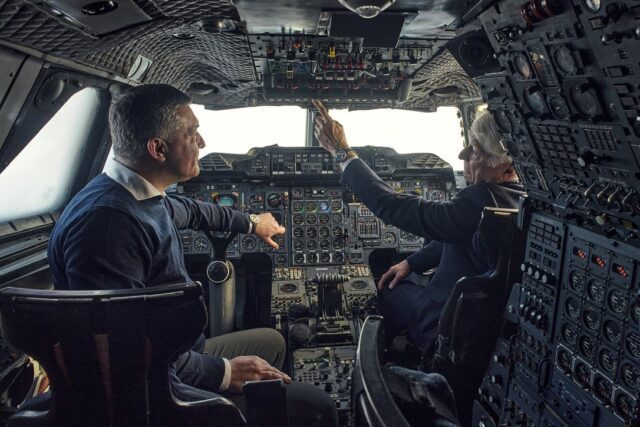
It was unlike any other flying experience. Concorde felt both incredibly powerful and remarkably gentle. The cabin was intimate, the service personal, the food and drinks exquisite, you were greeted by name and even the cockpit was accessible!
At 60,000 feet, you were flying above weather systems, so the flight is extremely smooth. The sky becomes a deep, almost cosmic blue. It’s difficult to describe; it feels like every sensation is heightened: speed, altitude, light.
It’s not just a flight – it was an experience that I’ve carried with me for life. It was a firework of emotions, sensations, and awe. Imagine you are an astronaut and experiencing 0 gravity for the first time: it is simply mind boggling.
It was also amazing to note that you would take off at 11:00 in Paris and land at 08:30 in New York, you could see the sun rise twice, as you were flying faster than the rotation of Earth: a real time machine.
Of course, I timed this flight at 3 hours, 30 minutes and precisely 0 seconds on my 1968 Breitling Navitimer.
How did the idea for a commemorative watch first emerge?
That Concorde flight stayed with me for years. When the aircraft was retired in 2003, I realised how fortunate I had been to experience it.
The idea really took shape in 2019, on the 50th anniversary of Concorde’s first flight. I thought: this is a moment that should be commemorated properly. So, I wrote directly to the CEO of Breitling, because if anyone represents aviation in watchmaking, it’s them and their iconic aviation model the Navitimer.
He replied within 48 hours: no – impossible, due to trademarks.
Most people might have stopped there. What kept you going?
Perseverance. That’s something I learned at school – if you believe in something, you keep finding ways forward.
I began reaching out across the aviation world, starting with contacts at Airbus, heritage teams, collectors, pilots. It took four years of discussions and negotiations just to secure initial approvals. Along the way, I even started developing a version of the watch with a local watchmaker.
Then, finally, I received a simple email from Airbus granting permission to proceed for 50 pieces. That changed everything.
How did Breitling ultimately become involved?
Once I had the green light, I went back to Breitling. They liked the idea so much that they took ownership of the idea entirely, deciding to develop it as a Breitling-led project.
Crucially, they kept me involved in the process, particularly in shaping the story, design details, and authenticity.
What was your role in shaping the final watch?
I worked closely with their teams on design and storytelling. For example, I shared my own Concorde photos to guide details like the colour of the dial – capturing that deep blue sky at 60,000 feet – and the unique white of the aircraft itself, often called the “White Bird.”
There were multiple prototypes. Eventually, we landed on a design with a beautiful blue dial that shifts in tone depending on the light, echoing the Concorde experience.
I also pushed for meaningful details, like engraving “Mach 2” on the back, to reflect the aircraft’s extraordinary speed.
It sounds like a complex process. What were the biggest challenges?
Negotiation at every level. Breitling is a company where decisions are very carefully controlled, and most ideas are initially rejected as they set the bar very high.
So it became about how to present ideas thoughtfully – never forcing, always guiding. That balance of persistence and diplomacy was essential.
Another challenge was coordinating people: Airbus, Breitling, museums, former Concorde pilots. At one point, access to a Concorde cockpit for filming the marketing campaign seemed impossible – until I connected the right people and made it happen.
Tell us about the launch of the watch.
After years of work, everything came together in early 2026. The watch launched globally on March 18, with events in Geneva and Lausanne.
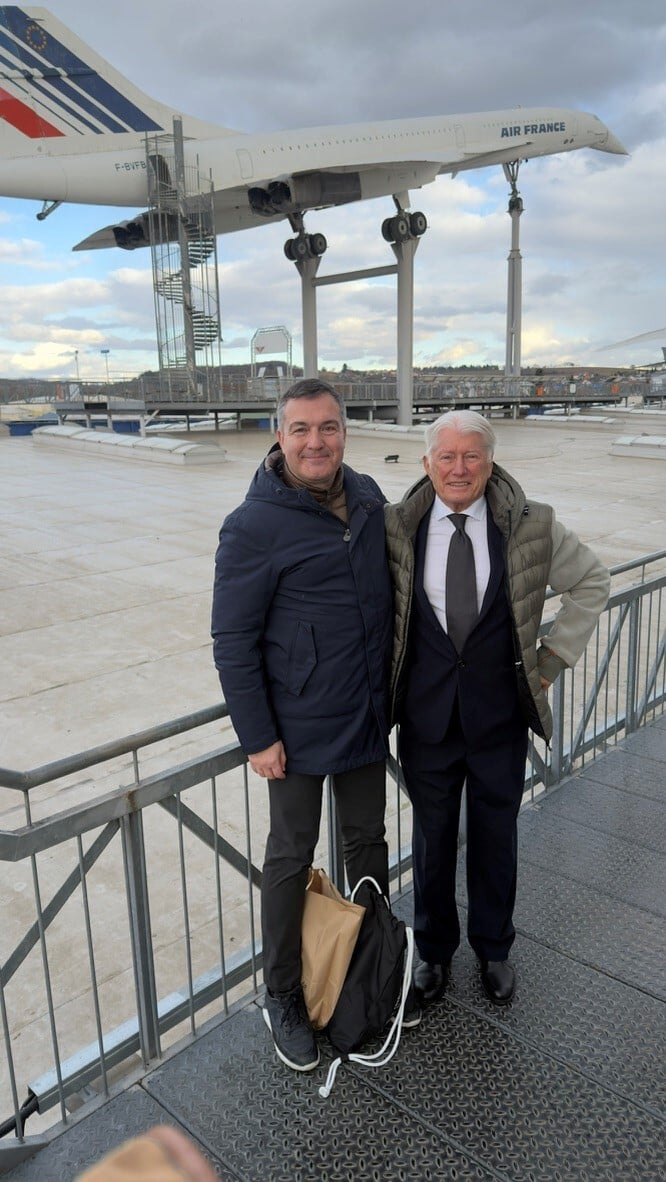
One of the most meaningful moments was ensuring my friend Jean-Louis Chatelain the Concorde Captain who had been involved in the project could have access to a watch himself. And not just any Captain, Jean Louis Chatelain, who had been the pilot on my flight home from New York and let me sit in the cockpit with him for the landing. That felt like closing the circle – honouring the people behind the aircraft, not just the machine.
As he is prominent in the advertising campaign, he told me jokingly that he did not expect to finish his pilot career as a model (!).
The launch was a great success. What resonated with people wasn’t just the product, it was the story, the emotion, the extreme facts and figures about the aircraft, and the legacy of Concorde.
Looking back, what did this project teach you?
That great ideas take time and persistence. This journey took seven years.
It reinforced everything I learned early on: stay curious, be adaptable, connect people, and keep going even when doors close. Often, the path forward appears from a completely unexpected angle.
SMC with its rich curriculum helped to expand my knowledge and approach to real life situations. This was one of them like using all your skills to solve a complex situation and reach a superior goal.
What lessons has this experience taught you that you can share with current students?
Focus and determination matter more than ever. Take the time to do things properly, as even small details count.
And if you have a dream, pursue it. You might not realise how far you’ve come until you look back – but when you do, it can be extraordinary. If you stay open, work hard, and build genuine connections, you can bring people together to create something meaningful and, in this case, help keep the spirit of Concorde alive.
For those who wish to go further, Scotland is lucky to have a Concorde at the National Museum of Flight at East Fortune.
Aviation enthusiasts who would like to read more, please visit:
https://www.breitling.com/ch-fr/news/experiencing-concorde-part-1/
https://www.breitling.com/ch-fr/news/experiencing-concorde-part-2/