When did your ESMS journey begin?
I was fortunate enough to be a “wee poppy” – I joined the Junior School and stayed all the way through until leaving in 2019. Looking back, I feel really lucky that my parents gave me the chance to grow up within the ESMS community. Being at the school from such a young age meant the values, routines, and friendships became a huge part of who I am.
What memories stand out from your time in the Junior School?
Most of my strongest memories come from Primary 4 to Primary 7. I loved the old buildings – especially the one with the two floors and the big yellow support poles by the library!
Performing was a big part of my Junior School experience. I was always in the school choirs and was incredibly lucky to sing a solo at the Royal Edinburgh Military Tattoo. I was only 12 or 13, performing What a Wonderful World in front of 10,000 people a night for about 20 evenings. That’s something I’ll never forget. I was also in the Joseph Choir and even performed as a Pict in another Tattoo production. It was amazing to do things far beyond what you’d think of as “normal” school life.
Were School productions a big part of your time at ESMS?
Yes, when I had the time! I wasn’t in every production because there was so much going on both inside and outside the classroom, but the ones I took part in were brilliant. I remember watching Les Misérables performed by older pupils and being blown away by the quality of the production. The commitment from staff – costumes, sets, endless rehearsals – went way beyond teaching. That level of dedication makes you feel really special as a pupil.
You’ve spoken warmly about your teachers. Who made a particular impact?
So many. I hesitate to name names because I’ll miss people out, but a few had a really profound influence.
Mrs Bennett, my form teacher at Ettrick, was instrumental in supporting me academically and with my swimming. She really understood the balance required to be a student-athlete.
Mrs Burt in Product Design was fantastic too. And Dr Broughton, who sadly passed away since I left school, was an inspirational physics teacher. He played a huge role in sparking my passion for engineering.
Across the board, what stood out was the genuine care from teachers. They always wanted to know how you were doing – not just academically, but as a person.
How did ESMS help prepare you for life after school?
ESMS taught me to dream big. David Gray, my headmaster, always encouraged us to choose subjects we enjoyed and were good at. He made it clear that following your gut is often the best decision.
The Junior School values were also deeply instilled in us – even though I can’t list all seven anymore! They shaped a lot of the confidence I now carry into challenges.
The School helped build a foundation for being a dual student-athlete, something that has defined my path through university and competitive swimming. I’m still grateful for that balance.
What role did the school community and friendships play in your life?
A huge one. Because I was a swimmer, I had friendships inside and outside school – but some of the strongest were with other boys who trained with me and sat beside me in class. We travelled together, competed together, and one of our proudest moments was going to the Bath Cup in London. We had one mission: win both events and break the records. And we did.
Those friendships have lasted to this day, even though people now live all over the world. And beyond swimming, the community spirit at ESMS meant you always felt connected to something bigger.
What path did you take after leaving school?
I initially went to Loughborough to study chemical engineering, but after a year I realised Edinburgh was a better fit for me both academically and for swimming. I’ve loved studying chemical engineering, it expanded so much of what I learned at school and carried me through the first few years of university.
During my degree I became increasingly interested in how engineering can be applied to medicine. That took on new meaning in fourth year, when I was diagnosed with an inoperable, incurable brain tumour.
You’ve been incredibly open about your diagnosis and advocacy work. Can you share what you’re doing now?
It’s been a whirlwind. I came very close to qualifying for the Paris Olympics, but symptoms affecting my training eventually led to the diagnosis. Since then, I’ve tried to face it head‑on – partly why I chose to do my master’s thesis on nanoparticle drug delivery for brain cancer.
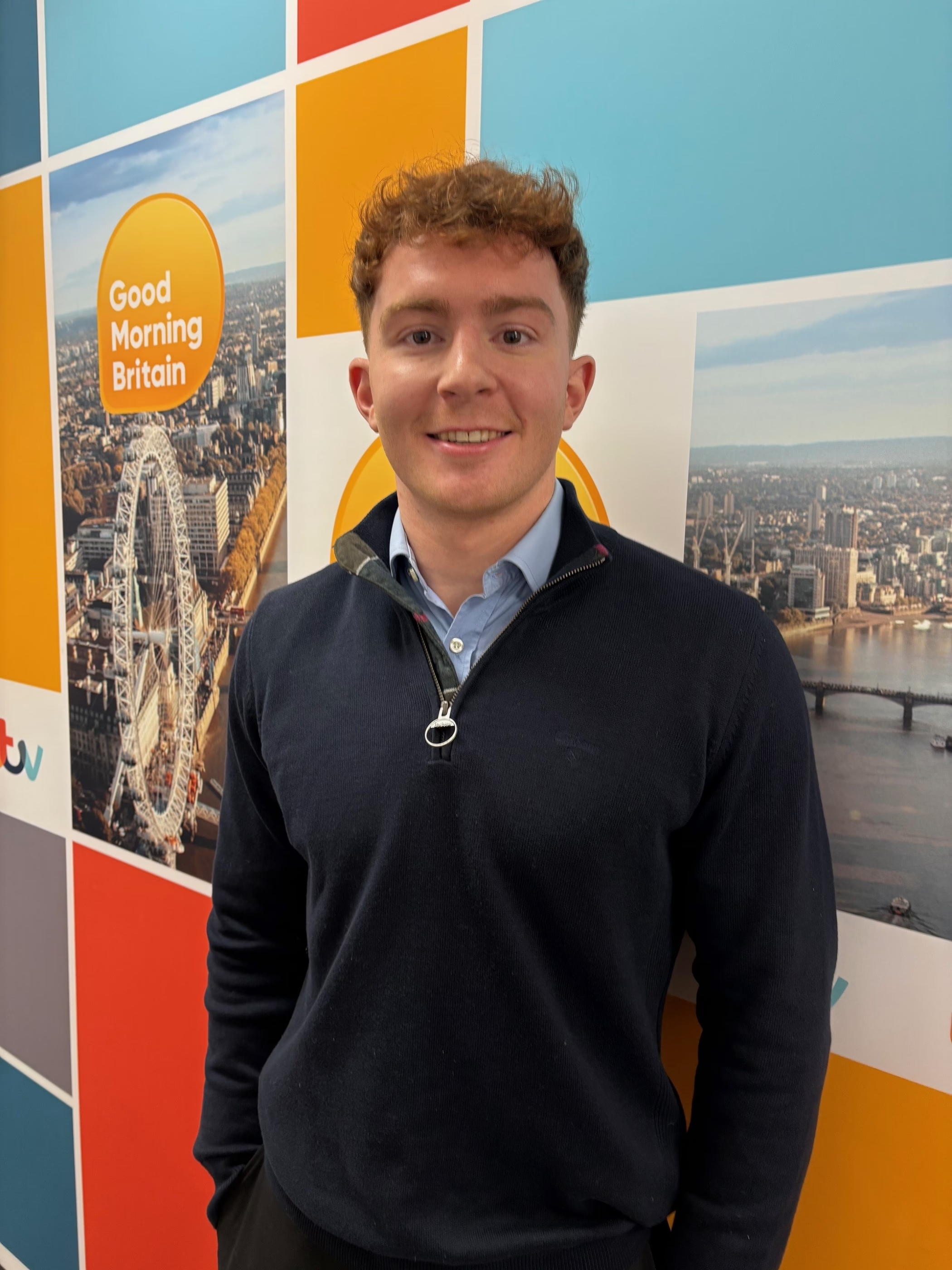
I’m now heavily involved in raising awareness and improving treatment pathways. I’ve spoken in Parliament, appeared on Good Morning Britain and BBC, and supported the Turn Terminal to Treatable petition, which campaigns for better funding, equal access to genomic sequencing for patients, and the right to try innovative treatments.
I’ve recently been able to access a promising drug for now, my tumour’s growth has stabilised, which has given me the hope and energy to keep pushing.
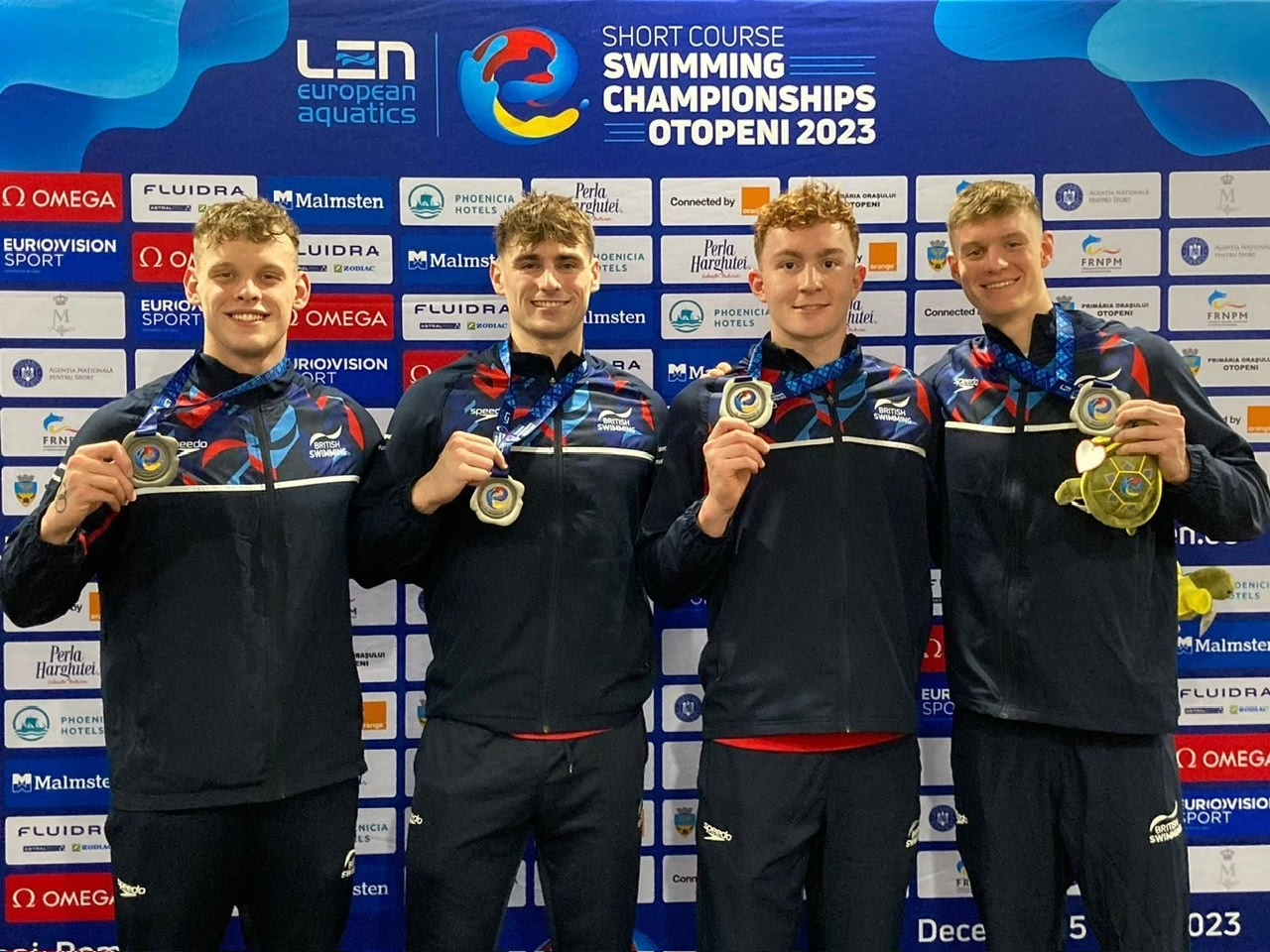
Alongside all of this, I’m still swimming competitively. I’m training for the Glasgow Commonwealth Games, having already hit consideration times. The dream is to represent Scotland at a home Games and bring home a medal.
To find out more about Archie’s campaign, click here, or find out more about his charity concert taking place on 20 March here.