Among the many files being unearthed at the Archives as we continue with the cataloguing of the collection are a set of box files with contents that date back to the first half of the 20th Century. Volunteer archivist, Laurie Brown, spotted a revealing government document dated 1945 entitled ‘The Needs of Youth in These Times’. It cost 1 shilling and sixpence and was published by The Scottish Education Department.
It’s a fascinating insight into post war society in Scotland as experienced by the ‘youth’ of the day, albeit through the machinations of a distinguished gathering of ‘adults’ with links to education and youth services.
The introduction clearly states the aims of the committee:
‘The report is an attempt to survey from the widest angle the whole potentialities of youth, the influences affecting it, and the means by which its potentialities may be developed and guided along sound lines.’
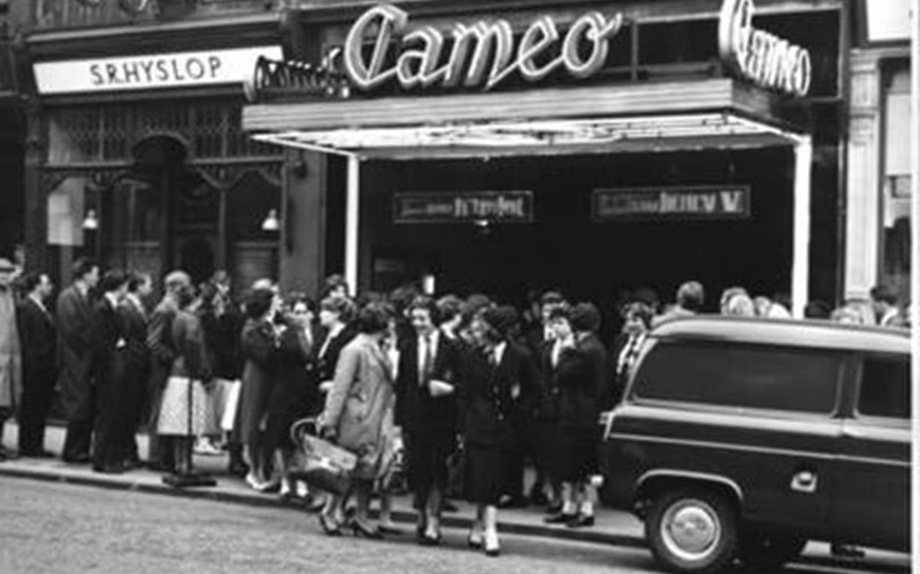
One section caught my attention especially as the impact of phones and the prolific use of ‘False news’ on today’s youth [JM1] are hot topics. If you think we currently have issues in controlling screen time for our children, imagine the impact the rise of the cinema had in post war Britain. According to the report it was quite a problem.
Cinemas and Dance Halls
‘The addiction of many young people to the dance hall and the cinema has reached dimensions which must be deplored. For a boy or a girl regularly to spend three nights a week at cinema and two at the dancehall is by no means uncommon. Cases have come to our notice of both children and young persons attending cinemas five and six nights a week.
The cinema may be less noxious than the billiard room or the dog track, even when indulged to this extent, but it has a grave disadvantage is that it demands nothing from its young audiences but passive absorption of the wares which are thrown so indiscriminately on the screen, and that a large portion of films shown are likely to give underdeveloped young people distorted ideas of society, morality, science, history, and in fact of everything they touch about which the camera can lie.’
Oh my! Who would have thought that what we see on screen is not actually the truth… quite a statement at a time when wartime propaganda was still dominating the airwaves. However, there was apparently a bright side to spending hours watching movies and hanging out at dance halls:
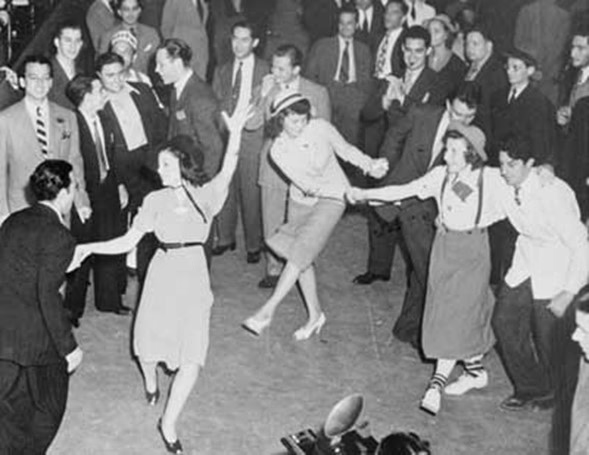
‘On the other hand, the cinema is the only place other than the street which many children and young persons know as a retreat from their overcrowded and possibly unwelcoming homes. The dance hall offers a more active form of leisure occupation. It offers society, music, movement, and an opportunity for dress and display, for many refinements, graces and even courtesies which are absent from everyday lives of many young people. It offers only a very shallow form of activity, however and presents dangers for certain types of young people. There is definitely a need of some improvement in the conditions to which the young may be introduced in some of them.’
What became of the miscreant youngsters who spent all their pounds, shillings, pence and time in front of the silver screens and strutting their stuff on the dance floor long before the invention of the discotheque? Well perhaps we should ask our grandparents who will probably have their own thoughts to add on the impact of social media, screen time and today’s clubbing scene!